
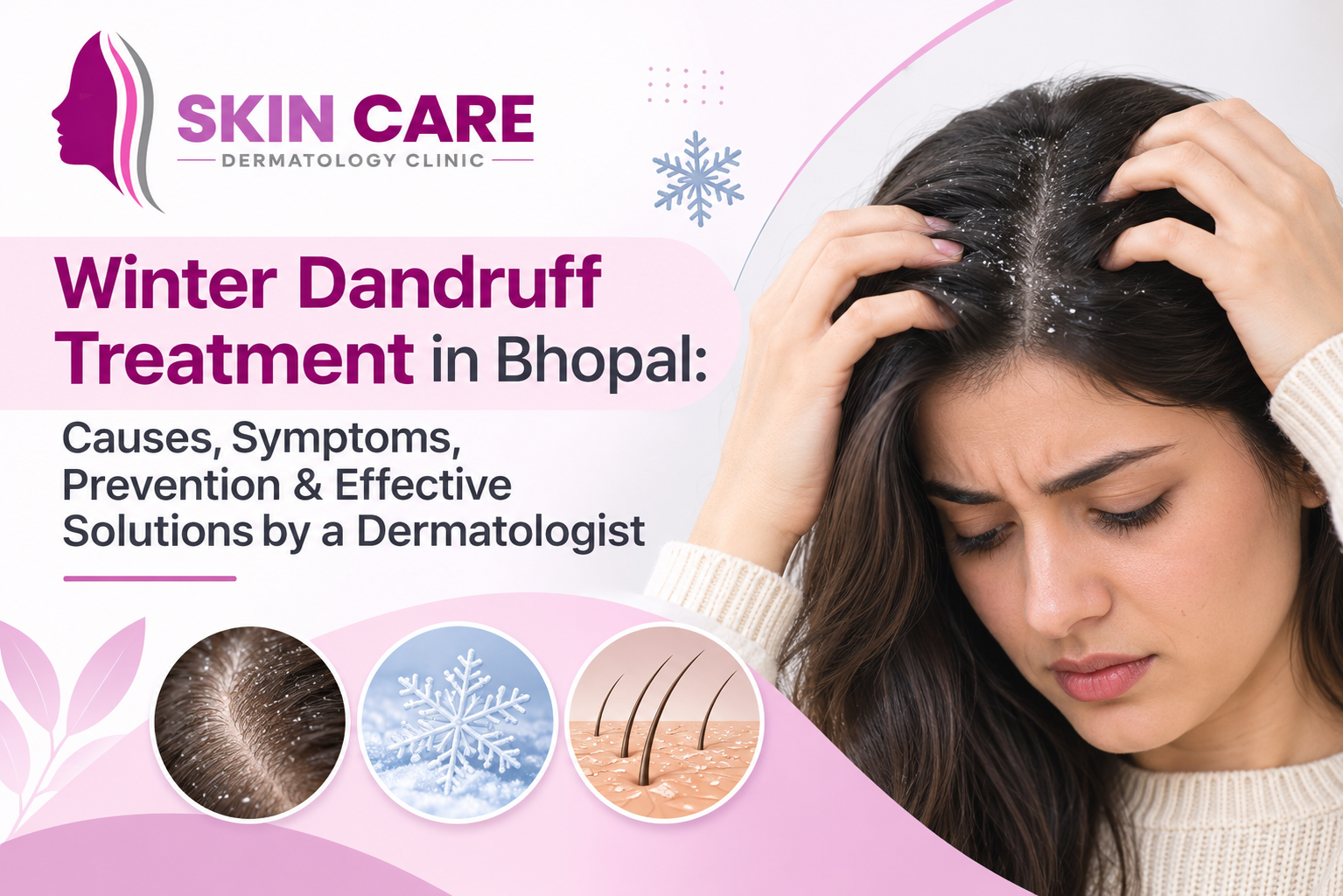
Dandruff Treatment in Bhopal is an important consideration for people experiencing an itchy scalp, white flakes and irritation during the winter season. Cold weather, low humidity, scalp dryness and certain skin conditions can make dandruff more noticeable. Although dandruff is a common scalp concern, persistent flaking and itching may require professional evaluation to identify the underlying cause and select suitable treatment.
Dr. Prerna Sharma is an experienced dermatologist in Bhopal who provides personalised skin and hair care. With over 11 years of clinical experience, she focuses on identifying individual scalp concerns and recommending appropriate dermatological treatments based on the patient’s condition, medical history and scalp type.
Why Does Dandruff Increase During Winter?
Dandruff may become more noticeable during winter because cold air and low humidity can contribute to scalp dryness and irritation. Indoor heating, hot showers and unsuitable hair care products may further affect scalp comfort.
However, dandruff is not always caused by dryness. It can also be associated with excess scalp oil, sensitivity to certain skin microorganisms and inflammatory conditions such as seborrheic dermatitis.
Consulting a Dermatologist in Jawahar Chowk, Bhopal can help identify whether the symptoms are related to ordinary dandruff, dry scalp or another dermatological condition.
What Are the Common Causes of Dandruff?
Understanding the causes of dandruff is an important step towards choosing the right treatment. Some common contributing factors include:
1. Dry Scalp
Cold weather and low humidity can reduce moisture in the scalp, leading to dryness, tightness and visible flakes. People with dry skin may notice increased scalp discomfort during winter.
2. Excess Scalp Oil
Excessive oil production can contribute to dandruff. Oil and dead skin cells may accumulate on the scalp, creating an environment that encourages flaking and irritation.
3. Malassezia Yeast
Malassezia is a naturally occurring yeast found on the scalp. In some people, sensitivity to this microorganism and its interaction with scalp oils may contribute to dandruff and inflammation.
4. Seborrheic Dermatitis
Seborrheic dermatitis is an inflammatory skin condition that commonly affects oily areas, including the scalp. It may cause persistent flakes, redness, itching and greasy scaling.
5. Hair Care Products
Certain shampoos, conditioners, hair dyes and styling products may irritate sensitive scalps. Product buildup or allergic reactions can sometimes cause itching and flaking.
A Skin Specialist near Indraprastha, Bhopal can examine the scalp and help determine which factors may be responsible for persistent symptoms.
Dandruff Treatment in Bhopal: Common Symptoms You Should Know
Dandruff symptoms can range from mild flaking to persistent scalp irritation. Recognising these signs can help people seek timely care.
Common symptoms include:
- White or yellowish flakes on the scalp and hair.
- Persistent itching or scalp irritation.
- Dry or greasy scaling.
- Redness and inflammation.
- Visible flakes on clothing, especially around the shoulders.
- Scalp discomfort that becomes worse during winter.
If these symptoms continue despite regular hair washing or suitable anti-dandruff products, professional evaluation may be helpful.
Dry Scalp vs Dandruff: What Is the Difference?
Dry scalp and dandruff can have similar symptoms, but they are not the same condition.
A dry scalp generally develops when the skin loses moisture. It may cause small, dry flakes accompanied by tightness or irritation.
Dandruff is often associated with scalp oil, yeast activity and inflammation. The flakes may appear larger, white or yellowish and can be accompanied by itching.
Seborrheic dermatitis may produce greasy scales and redness. Other conditions, including scalp psoriasis and contact dermatitis, can also cause flaking.
A dermatologist can examine the scalp and recommend appropriate care rather than treating every type of flaking as ordinary dandruff.
Effective Dandruff Treatment Options Recommended by Dermatologists
The right Dandruff Treatment in Bhopal depends on the cause, severity and condition of the scalp. Treatment may involve medicated shampoos, suitable scalp care products and prescription medicines when necessary.
1. Medicated Anti-Dandruff Shampoos
Anti-dandruff shampoos may contain ingredients such as:
- Ketoconazole: Helps control Malassezia yeast associated with dandruff.
- Zinc pyrithione: Helps manage dandruff and scalp flaking.
- Selenium sulfide: Helps reduce flaking and yeast activity.
- Salicylic acid: Helps loosen and remove accumulated scales.
The appropriate ingredient and frequency of use depend on the scalp condition. Follow product instructions or your dermatologist’s advice.
2. Treatment for Scalp Inflammation
When dandruff is associated with significant redness, itching or inflammation, a dermatologist may recommend suitable prescription treatments. These may include short-term anti-inflammatory scalp preparations when clinically appropriate.
3. Scalp Care and Moisturisation
People experiencing dryness may benefit from suitable scalp care products. However, applying heavy oils or unsuitable products can worsen some forms of dandruff. Product selection should depend on whether the scalp is dry, oily or inflamed.
4. Personalised Dermatological Treatment
Persistent or recurring dandruff may require a detailed scalp examination. A dermatologist can identify conditions such as seborrheic dermatitis, psoriasis or contact dermatitis and recommend condition-specific treatment.
Winter Hair and Scalp Care Tips to Prevent Dandruff
Along with suitable treatment, following a consistent scalp care routine may help reduce irritation and manage dandruff during winter.
- Use suitable shampoo: Choose an anti-dandruff or gentle shampoo according to your scalp condition.
- Avoid very hot water: Hot showers may increase dryness and irritation.
- Wash your scalp regularly: Follow a washing routine suitable for your hair type and scalp condition.
- Avoid excessive styling products: Heavy products may contribute to buildup or irritation.
- Do not scratch your scalp: Scratching can damage the skin and worsen inflammation.
- Avoid unsuitable home remedies: Lemon juice, baking soda and harsh mixtures may irritate the scalp.
- Follow medical advice: Use medicated products as recommended and avoid changing treatments repeatedly without guidance.
These habits may help support scalp health but cannot prevent every cause of dandruff.
When Should You Consult a Dermatologist for Dandruff?
Occasional dandruff may improve with suitable over-the-counter shampoos and regular scalp care. However, persistent symptoms should not be ignored.
Consider consulting a Dermatologist in Jawahar Chowk, Bhopal, if you experience:
- Severe or continuous scalp itching.
- Persistent redness or inflammation.
- Thick or excessive scalp scaling.
- Dandruff that does not improve with regular treatment.
- Painful scalp irritation or sores.
- Hair shedding associated with significant scalp inflammation.
A dermatologist can examine the scalp, identify the underlying condition and recommend an appropriate treatment plan.
Best Skin Clinic in Bhopal for Personalised Hair and Scalp Care
Choosing the right dermatologist is important when dealing with recurring dandruff and other scalp concerns. Professional evaluation helps distinguish common dandruff from conditions that require specific medical treatment.
At Dr. Prerna Sharma’s clinic, patients receive personalised dermatology care for different skin and hair concerns. Treatment recommendations are based on clinical examination, individual symptoms and medical history.
People looking for a Skin Specialist near Indraprastha, Bhopal can consult Dr. Prerna Sharma for guidance regarding dandruff, scalp irritation, hair disorders and other dermatological concerns.
The clinic focuses on evidence-based care, appropriate treatment options and individual attention to support long-term skin and scalp health.
About Dr. Prerna Sharma – Dermatologist in Bhopal
Dr. Prerna Sharma completed her MBBS from Barkatullah University and MD in Dermatology from Vikram University, earning a Gold Medal in both degrees, according to her clinic profile. She is also an Associate Professor at Chirayu Medical College.
With over 11 years of clinical experience, she provides care for various skin, hair and nail conditions. Her areas of expertise include acne treatment, pigmentation management, hair fall treatment, skin allergies and advanced cosmetic dermatology procedures.
Patients seeking Dandruff Treatment in Bhopal can consult Dr. Prerna Sharma to understand the possible causes of scalp problems and explore suitable treatment options.
FAQs – Dandruff Treatment in Bhopal
1. Why does dandruff increase during winter?
Dandruff may become more noticeable during winter because low humidity and cold weather can contribute to scalp dryness. Changes in scalp oil and inflammation may also worsen flaking.
2. Which shampoo is best for dandruff?
Shampoos containing ketoconazole, zinc pyrithione, selenium sulfide or salicylic acid may help manage different types of dandruff. The most suitable shampoo depends on the scalp condition and should be selected according to medical advice.
3. Can dandruff cause hair fall?
Dandruff does not usually cause permanent hair loss. However, severe itching, scratching and scalp inflammation may contribute to temporary hair shedding or hair breakage.
4. How can I control dandruff naturally during winter?
Maintaining scalp hygiene, avoiding very hot water, using suitable hair care products and avoiding harsh home remedies may help reduce irritation. Persistent dandruff may require medicated treatment.
5. When should I visit a Skin Specialist near Indraprastha, Bhopal?
Consult a dermatologist if dandruff persists, causes severe itching, produces redness or does not improve with suitable anti-dandruff shampoos. Professional evaluation can help identify the underlying cause.
6. Is dandruff permanently curable?
Dandruff can often be controlled effectively with suitable treatment and regular scalp care. However, it may recur, particularly in people with seborrheic dermatitis or recurring scalp sensitivity.
7. Does dandruff occur because of poor hygiene?
No. Dandruff is not simply a result of poor hygiene. It can be associated with yeast activity, scalp oil, skin sensitivity and inflammatory conditions. Regular scalp washing can help manage flakes, but it may not eliminate the underlying cause.
Conclusion – Winter Dandruff Treatment in Bhopal
Winter dandruff can cause itching, visible flakes and scalp discomfort, affecting everyday comfort and confidence. Understanding its underlying cause is essential for choosing appropriate treatment. While regular scalp care and medicated shampoos may help manage mild dandruff, persistent symptoms require professional evaluation.
Dr. Prerna Sharma provides personalised dermatology care for people experiencing dandruff and other hair and scalp concerns. Consulting an experienced dermatologist can help you understand your scalp condition and follow a suitable treatment plan for healthier scalp care.