Uncategorized

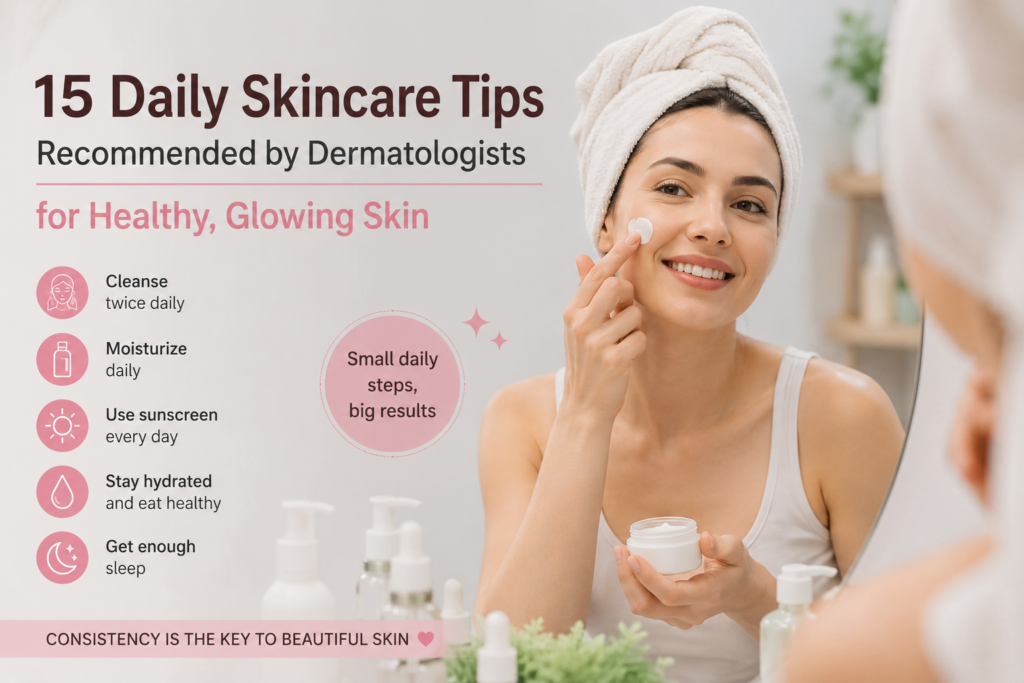
15 daily skincare tips recommended by dermatologists for healthy glowing skin including cleansing, moisturizing, sunscreen, hydration, and healthy lifestyle habits.
Uncategorized

15 Daily Skincare Tips Recommended by Dermatologists for Healthy, Glowing Skin

Healthy skin is more than just looking beautiful—it reflects your overall health and the way you care for your body every day. Pollution, dust, UV rays, stress, unhealthy eating habits, lack of sleep, and improper skincare can gradually damage the skin, leading to dullness, acne, pigmentation, dryness, premature aging, and uneven skin tone. While many people invest in expensive beauty products, they often overlook the importance of following simple daily skincare habits consistently. Following Daily Skincare Tips for Healthy, Glowing Skin can help protect your skin barrier, reduce common skin problems, and maintain a naturally radiant complexion. However, achieving healthy skin is not about using dozens of products. Instead, it is about understanding your skin type and choosing the right skincare routine that works for you. Dermatologists recommend building healthy skincare habits early because prevention is always better than treatment. A consistent routine can reduce the risk of acne, pigmentation, sun damage, and premature wrinkles while keeping your skin hydrated and healthy throughout the year. Many people from Gulmohar, Arera Colony, Shahpura, Kolar Road, and Danish Nagar visit Dr. Prerna Sharma for personalized skincare advice because every skin type has different needs. Whether you have oily, dry, combination, or sensitive skin, expert guidance from a Skin Specialist in Bhopal helps you choose products and treatments that are both safe and effective. In this blog, you’ll discover 15 Daily Skincare Tips for Healthy, Glowing Skin recommended by dermatologists, along with practical advice that can easily become part of your daily routine. Why Is a Daily Skincare Routine Important? Your skin works around the clock to protect your body from pollution, bacteria, harmful UV rays, and environmental damage. Without proper care, the skin barrier gradually weakens, making your skin more prone to dryness, irritation, pigmentation, acne, and early signs of aging. A simple yet consistent Skincare Routine for Glowing Skin helps maintain the skin’s natural balance while supporting long-term skin health. Protects the Skin Barrier The skin barrier acts as your body’s first line of defense. Daily cleansing, moisturizing, and sun protection help keep this barrier healthy and reduce moisture loss. Prevents Skin Problems Before They Start It is much easier to prevent acne, pigmentation, and sun damage than to treat them later. Following Skin Care Tips Recommended by Dermatologists every day reduces the chances of developing long-term skin concerns. Supports Healthy Aging A good skincare routine encourages collagen production, improves skin hydration, and protects against premature wrinkles caused by UV exposure and pollution. Keeps Your Skin Looking Fresh Daily skincare removes dirt, excess oil, and dead skin cells while improving skin texture and maintaining a naturally glowing appearance. Patients looking for Glowing Skin Treatment in Bhopal often discover that combining professional treatments with healthy daily habits provides the best long-term results. How Can You Build the Perfect Daily Skincare Routine? A skincare routine does not need to be complicated. Using the right products consistently is far more effective than using too many products occasionally. Morning Skincare Routine Your morning routine focuses on protecting your skin throughout the day. A simple morning routine includes: Gentle cleanser or face wash Vitamin C serum (if suitable) Moisturizer Broad-spectrum sunscreen (SPF 30 or higher) Sunscreen is especially important because UV rays can cause pigmentation, premature aging, and sun damage even on cloudy days. Evening Skincare Routine Nighttime is when your skin repairs itself naturally. A healthy evening routine usually includes: Gentle cleanser Treatment products recommended by your dermatologist Retinol (when appropriate) Moisturizer Removing dirt, makeup, sunscreen, and pollution before sleeping allows your skin to recover more effectively overnight. Weekly Skincare Habits Along with your daily routine, dermatologists recommend: Gentle exfoliation once or twice a week Hydrating face masks when needed Checking your skin for new moles or unusual changes Cleaning makeup brushes regularly Replacing expired skincare products People living in busy areas such as MP Nagar, Hoshangabad Road, Char Imli, and BHEL are often exposed to higher levels of dust and pollution. Following a consistent Skincare Routine for Glowing Skin becomes even more important for maintaining healthy skin under these conditions. 15 Daily Skincare Tips Recommended by Dermatologists 1. Cleanse Your Face Gently Twice a Day Cleansing removes dirt, excess oil, sweat, sunscreen, pollution, and bacteria that collect on your skin throughout the day. Washing your face every morning and before bedtime helps keep your pores clean and supports healthy skin. However, avoid overwashing. Cleansing more than twice daily may strip away your skin’s natural oils and weaken the skin barrier. Choose a mild face wash based on your skin type: Gel cleansers for oily skin Cream cleansers for dry skin Gentle fragrance-free cleansers for sensitive skin Many patients visiting a Skin Doctor in Bhopal are surprised to learn that using harsh soaps often worsens acne and dryness rather than improving them. 2. Choose Skincare Products According to Your Skin Type No skincare product works equally well for everyone. Understanding whether your skin is oily, dry, combination, or sensitive helps you choose products that support your skin instead of irritating it. For example: Oily skin benefits from lightweight, oil-free products. Dry skin requires richer moisturizers. Combination skin needs balanced hydration. Sensitive skin responds best to fragrance-free formulations. If you are unsure about your skin type, a consultation with a Skin Specialist in Bhopal can help you build a personalized skincare routine. Patients from Baghmugalia, Katara Hills, Rohit Nagar, and Trilanga frequently seek professional advice because using unsuitable products often leads to acne, redness, or skin irritation. 3. Never Skip Sunscreen If there is one habit dermatologists recommend above all others, it is using sunscreen every day. Daily sunscreen protects your skin from: UV damage Pigmentation Melasma Sunburn Premature wrinkles Fine lines Skin cancer risk Choose a broad-spectrum sunscreen with SPF 30 or higher and apply it at least 20 minutes before stepping outdoors. Remember to reapply sunscreen every two to three hours if you spend long periods outside. People living around Kolar Road, Shahpura, Lalghati, and Mandakini Colony often spend significant time commuting or working outdoors. Regular sunscreen use helps reduce long-term

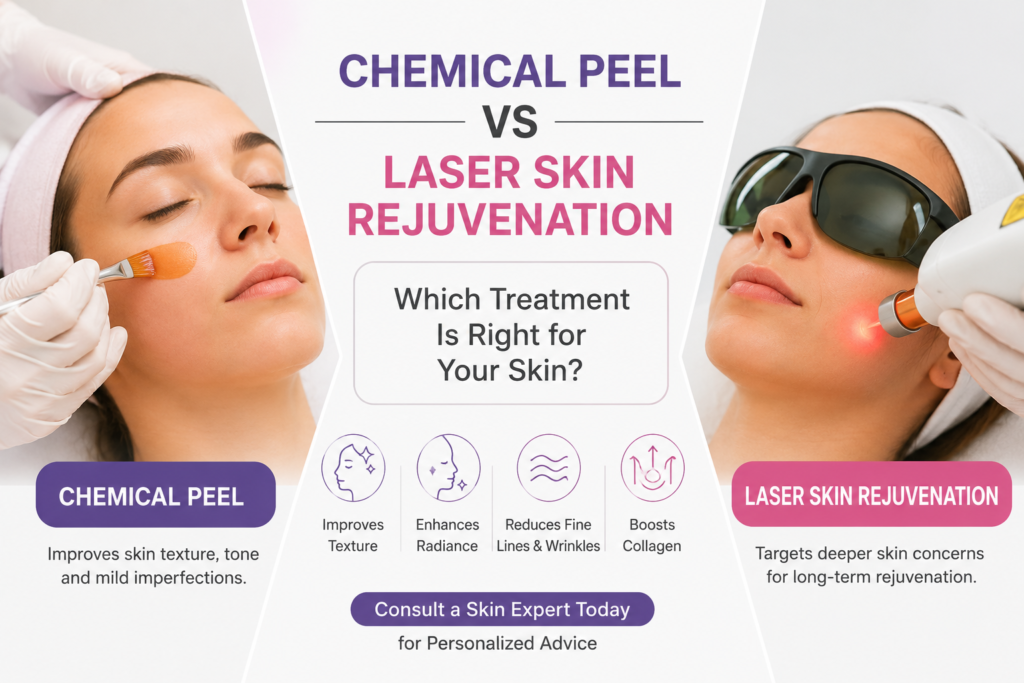
Chemical Peel vs Laser Skin Rejuvenation in Bhopal by Dr. Prerna Sharma, Dermatologist in Bhopal, comparing advanced skin treatments for glowing, youthful skin.
Uncategorized

Chemical Peel vs Laser Skin Rejuvenation: Which Treatment Is Right for Your Skin?

Healthy, glowing skin is something many people want, but factors such as aging, pollution, stress, sun exposure, hormonal changes, and unhealthy lifestyle habits can gradually affect the skin’s natural appearance. Over time, these factors may lead to pigmentation, acne scars, dull skin, uneven skin tone, fine lines, wrinkles, enlarged pores, and reduced skin elasticity. While a good skincare routine is important, it may not always be enough to correct deeper skin concerns. This is why professional dermatology procedures have become increasingly popular. Among the most effective options available today, Chemical Peel vs Laser Skin Rejuvenation is one of the most common comparisons patients ask about during a dermatologist consultation. Both treatments aim to improve skin quality, but they work in different ways and are suitable for different skin concerns. Choosing between these treatments depends on several factors, including your skin type, the severity of pigmentation, acne scars, sun damage, and your overall treatment goals. Rather than selecting a procedure based on online recommendations, it is always better to undergo a detailed skin evaluation by a qualified dermatologist. Patients from Gulmohar, Arera Colony, Shahpura, Kolar Road, Danish Nagar, and nearby areas frequently visit Dr. Prerna Sharma for personalized Skin Rejuvenation Treatment in Bhopal because every skin concern requires an individualized treatment plan. Whether you need Chemical Peeling in Bhopal for superficial pigmentation or Laser Skin Rejuvenation in Bhopal for deeper skin resurfacing, an expert assessment helps achieve safer and more natural-looking results. In this article, we will compare Chemical Peel vs Laser Skin Rejuvenation, explain how each treatment works, discuss their benefits, and help you understand which option may be more suitable for your skin. What Is a Chemical Peel Treatment? A chemical peel is a dermatologist-performed skin resurfacing procedure that uses specially formulated chemical solutions to remove damaged outer layers of the skin. This controlled chemical exfoliation encourages new skin cells to replace old ones, resulting in smoother, brighter, and healthier-looking skin. Unlike home exfoliating products, professional Chemical Peel Treatment in Bhopal uses medical-grade peeling agents selected according to your skin type and skin concerns. The treatment is carefully customized to improve skin quality while minimizing unnecessary irritation. How Do Chemical Peels Work? During the procedure, the dermatologist applies a carefully selected peeling solution to the treatment area. The solution gently loosens damaged skin cells from the surface. Over the following days, the treated skin naturally sheds, allowing healthier skin to emerge. This controlled skin renewal process helps improve: Pigmentation treatment Melasma Mild acne scars Dull skin Uneven skin tone Fine lines Sun damage Rough skin texture Mild acne Enlarged pores Since different skin concerns require different strengths of peel, the dermatologist first performs a detailed skin assessment before recommending treatment. Types of Chemical Peels Superficial Peels Superficial peels affect only the outermost layer of the skin. They are commonly recommended for dull skin, mild pigmentation, acne, uneven skin tone, and early signs of aging. Recovery is usually quick, making them suitable for many individuals seeking regular skin maintenance. Medium Peels Medium-depth peels penetrate deeper into the skin and may be recommended for moderate pigmentation, acne scars, fine lines, and melasma. Patients generally require a few days of recovery before the skin fully heals. Deep Peels Deep peels reach the deeper skin layers and are reserved for selected cases involving more significant wrinkles or severe sun damage. Because recovery is longer, they are performed only after careful dermatologist evaluation. Patients considering Chemical Peeling in Bhopal should always consult a qualified dermatologist to determine which peel is safest and most effective for their skin type. Which Skin Concerns Can Chemical Peels Improve? Professional Chemical Peel Treatment in Bhopal is commonly recommended for people experiencing: Acne and acne marks Mild acne scars Hyperpigmentation Melasma Sun tanning Uneven skin tone Dull complexion Fine lines Rough skin texture Open pores Chemical peels improve overall skin texture by encouraging healthy skin renewal rather than simply covering visible imperfections. What Is Recovery Like After Chemical Peeling? Recovery depends on the type of peel performed. Following superficial peels, patients may notice mild redness and light peeling for a few days. Medium peels generally involve more noticeable peeling and temporary skin sensitivity. Deep peels require longer recovery and close dermatologist supervision. Proper aftercare is essential for achieving the best outcome. Patients are usually advised to: Apply sunscreen daily. Use gentle moisturizers. Avoid direct sun exposure. Avoid scrubbing or picking peeling skin. Follow the prescribed skincare routine. Many patients from Trilanga, Bawadia Kalan, Chunabhatti, MP Nagar, and nearby areas choose Chemical Peeling in Bhopal because it offers gradual improvement with minimal downtime for suitable skin concerns. What Is Laser Skin Rejuvenation? While chemical peels primarily improve the outer skin layers through exfoliation, Laser Skin Rejuvenation in Bhopal works by delivering controlled laser energy into the skin. This stimulates natural collagen stimulation, promotes skin renewal, and encourages long-term improvement in skin quality. Laser technology targets specific skin concerns with greater precision, making it especially useful for deeper pigmentation, acne scars, fine lines, wrinkles, enlarged pores, and uneven skin texture. Unlike surgical procedures, Laser Skin Treatment in Bhopal is considered a non-surgical skin treatment that allows patients to improve skin quality with relatively little downtime when performed by an experienced dermatologist. How Does Laser Skin Rejuvenation Work? Laser devices emit carefully controlled light energy that reaches different layers of the skin. The laser creates tiny treatment zones while leaving surrounding tissue largely unaffected. This process activates the body’s natural healing response. As new collagen and elastin develop over the following weeks, the skin gradually becomes: Smoother Firmer Brighter More even in tone Better hydrated More youthful in appearance Collagen production continues for several months after treatment, which is why improvements often appear gradually rather than immediately. Which Skin Concerns Can Laser Skin Rejuvenation Improve? Many patients choose Laser Skin Rejuvenation in Bhopal for concerns that extend beyond the surface of the skin, including: Acne scars Deep pigmentation Melasma (selected cases) Fine lines Wrinkles Enlarged pores Sun damage Uneven skin tone Skin texture improvement Mild skin laxity Depending on

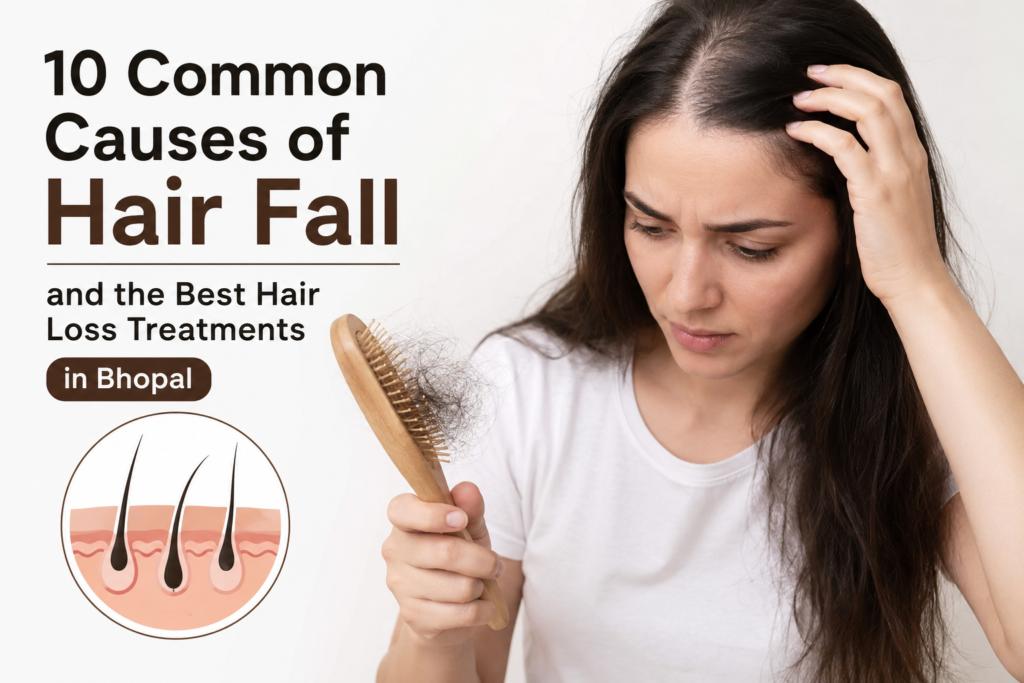
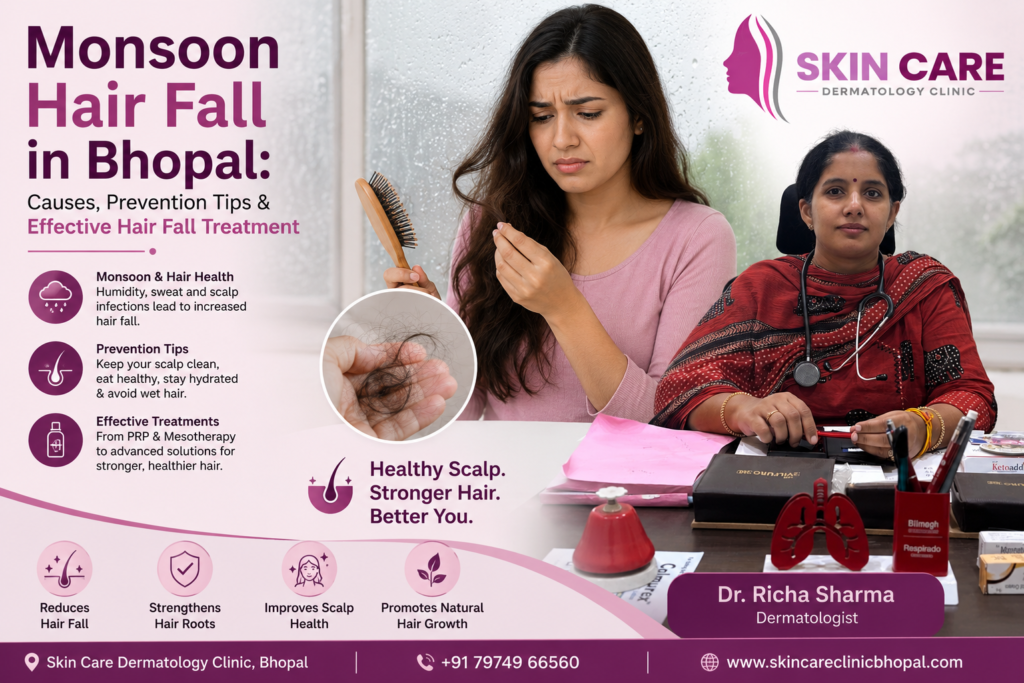
10 common causes of hair fall and the best Hair Fall Treatment in Bhopal by Dr. Prerna Sharma, Dermatologist and Hair Specialist in Bhopal.
Uncategorized

10 Common Causes of Hair Fall and the Best Hair Loss Treatments in Bhopal

Hair fall is one of the most common concerns affecting both men and women today. While losing a few strands of hair every day is completely normal, excessive hair shedding, thinning hair, or bald patches should never be ignored. Hair loss can affect your appearance, confidence, and emotional well-being. Fortunately, not every type of hair fall is permanent, and many conditions can be treated successfully with the right diagnosis and timely care. The causes of hair loss vary from person to person. Genetics, hormonal imbalance, stress, nutritional deficiencies, scalp infections, and certain medical conditions are among the most common reasons. Identifying the exact cause is the first and most important step because every patient requires a different treatment plan. Using random hair oils or over-the-counter products without understanding the underlying problem may delay proper treatment. Choosing professional Hair Loss Treatment in Bhopal allows you to receive a detailed scalp examination, accurate diagnosis, and evidence-based treatment designed specifically for your condition. Whether you are experiencing excessive hair fall, hair thinning, alopecia, or poor scalp health, early consultation with a qualified dermatologist often leads to better outcomes. Many patients from Gulmohar, Shahpura, Arera Colony, Kolar Road, Danish Nagar, Trilanga, MP Nagar, and nearby areas visit Dr. Prerna Sharma for personalized hair care solutions because early treatment helps protect existing hair follicles and supports healthier hair regrowth before hair loss becomes more advanced. What Is Hair Fall? Hair fall is a natural part of the hair growth cycle. Every hair strand passes through three stages growth (anagen), transition (catagen), and resting (telogen). Once the resting phase ends, the old hair sheds naturally to make room for new hair growth. On average, losing 50 to 100 hairs per day is considered normal. Since new hairs continue to grow, most people do not notice any visible reduction in hair volume during this process. However, when hair shedding becomes excessive or new hair fails to replace the lost strands, noticeable hair thinning may occur. This condition often requires medical evaluation to determine the underlying cause. Common warning signs include: Hair collecting on your pillow or comb every day Excessive hair fall during washing A widening hair parting Visible scalp through thinning hair Receding hairline Bald patches Reduced hair volume Persistent scalp itching or dandruff If these symptoms continue for several weeks, it is advisable to consult a Hair Specialist in Bhopal rather than relying on home remedies alone. Early diagnosis often improves the success of Hair Loss Treatment in Bhopal and helps prevent further hair follicle damage. Why Does Hair Fall Happen? Hair loss rarely has a single cause. In many patients, several medical, hormonal, nutritional, and lifestyle factors work together to affect the hair growth cycle. Understanding these causes is essential because successful treatment depends on identifying the exact reason behind the problem. Some people develop male pattern baldness because of genetics, while others experience female pattern hair loss due to hormonal changes. Similarly, excessive stress, nutritional deficiency, thyroid disorders, scalp infections, dandruff, poor sleep, crash dieting, or certain medications may all contribute to excessive hair fall. Healthy hair depends on healthy hair follicles, proper blood circulation, balanced hormones, good scalp health, and adequate nutrition. When any of these factors are disturbed, hair growth slows down and hair shedding increases. Instead of guessing the cause, a dermatologist performs a detailed scalp examination and recommends appropriate investigations whenever necessary. Patients looking for Hair Fall Treatment in Bhopal benefit from personalized diagnosis because every treatment plan is based on the individual’s scalp condition, medical history, and hair growth pattern. 10 Common Causes of Hair Fall 1. Genetic Hair Loss (Male & Female Pattern Baldness) Genetics is one of the most common reasons for long-term hair loss. If your parents or close family members have experienced baldness or thinning hair, your chances of developing similar problems are higher. In men, this condition usually appears as a receding hairline and thinning at the crown. In women, it commonly causes gradual thinning over the top of the scalp while preserving the frontal hairline. These conditions are known as male pattern baldness and female pattern hair loss. Common Symptoms: Gradual thinning of hair Receding hairline Increased scalp visibility Reduced hair density Family history of baldness Since genetic hair loss usually progresses over time, delaying treatment may lead to permanent hair follicle damage. Early Hair Regrowth Treatment in Bhopal can help slow progression, improve hair density, and preserve existing hair. If you notice gradual thinning, consult a Hair Doctor in Bhopal before the condition becomes advanced. 2. Hormonal Imbalance Hormones play an important role in maintaining healthy hair growth. When hormone levels change, the normal hair growth cycle may become disturbed, leading to excessive hair shedding and hair thinning. Women frequently experience hormonal hair loss due to Polycystic Ovary Syndrome (PCOS), pregnancy, menopause, or thyroid disorders. Men may also experience hormonal influences contributing to male pattern baldness. Common Symptoms: Diffuse hair thinning Irregular menstrual cycles Acne Oily skin Weight changes Increased facial hair in women Treating only the hair without correcting the hormonal imbalance often produces temporary results. Therefore, proper diagnosis is essential before starting Hair Loss Treatment in Bhopal. A dermatologist may recommend blood tests or additional medical evaluation before preparing a personalized treatment plan. 3. Stress and Anxiety Modern lifestyles have made stress-related hair loss increasingly common. Emotional stress, work pressure, lack of sleep, major illness, surgery, or sudden emotional trauma can push a large number of hair follicles into the resting phase. This condition is known as Telogen Effluvium. Hair fall often begins two to three months after the stressful event, making it difficult for many people to identify the real cause. Common Symptoms Sudden increase in daily hair fall Hair shedding while washing or combing Diffuse thinning across the scalp Reduced hair volume No obvious bald patches The good news is that stress-related hair loss is often reversible when the underlying trigger is managed properly. Along with stress management techniques, balanced nutrition, and scalp care, a dermatologist may recommend suitable Scalp Treatment in Bhopal, medications,

Scroll to Top