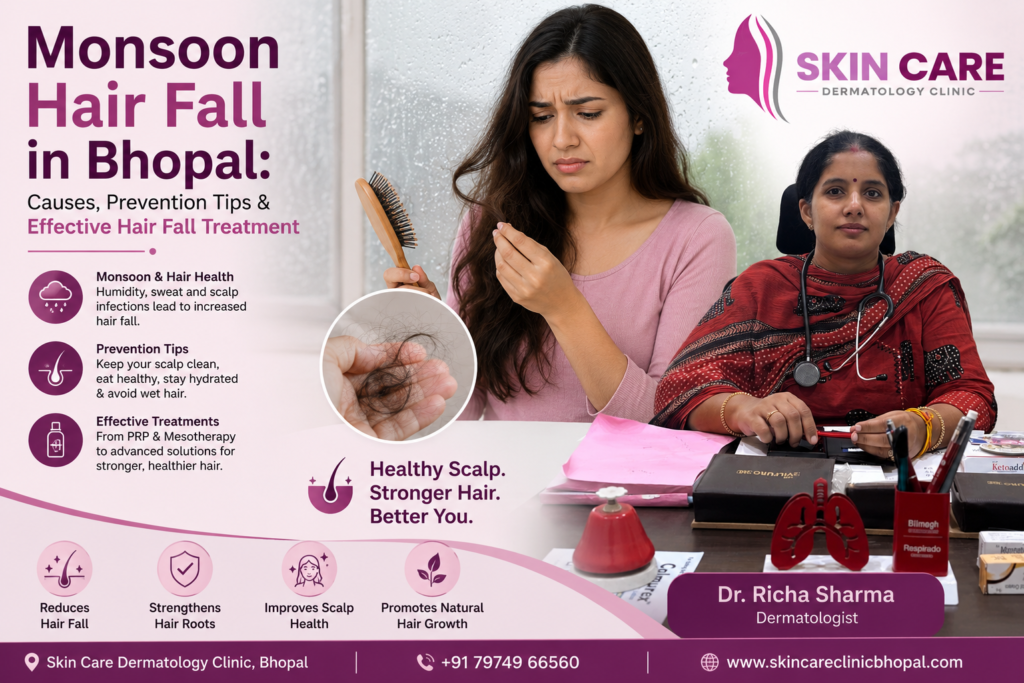
Monsoon Hair Fall in Bhopal: Causes, Prevention Tips & Effective Hair Fall Treatment
Hair Fall Treatment in Bhopal becomes especially important when increased hair shedding is noticed during the monsoon season. Humidity, sweat, dampness, scalp infections, and changes in hair-care habits can make hair feel weaker and more difficult to manage. If you are noticing more hair strands on your pillow, comb, or bathroom floor, you may wonder whether it is seasonal hair fall or a sign of an underlying concern. Monsoon-related hair fall can sometimes improve with proper scalp care and healthy hair-care habits. However, persistent or excessive shedding may be linked to nutritional deficiencies, hormonal changes, thyroid problems, dandruff, scalp conditions, stress, or other underlying factors. Identifying the actual cause is an important first step toward choosing the right treatment. At Dr. Prerna Sharma’s clinic, hair and scalp concerns are evaluated individually rather than treating every case in the same way. Dr. Prerna Sharma is an experienced Dermatologist in Bhopal with over 11 years of clinical experience. She provides evidence-based care for various skin, hair, and nail conditions, with treatment plans based on the patient’s condition, medical history, and individual needs. Why Does Hair Fall Increase During Monsoon? Hair can behave differently during the rainy season because the environment becomes more humid. High humidity may increase sweating and make the scalp feel oily or sticky. When sweat, oil, dirt, and product buildup remain on the scalp, they may contribute to dandruff and irritation. Another common issue is keeping the hair tied while it is still damp. Wet hair is more fragile and can break easily when brushed, combed, or tied tightly. Frequent exposure to rainwater can also leave the scalp and hair wet for longer periods. However, it is important to remember that not every case of hair fall during monsoon is caused by the weather. A Hair Fall Doctor in Bhopal may need to look for other possible causes when shedding is excessive, sudden, or continues beyond the seasonal period. Common Causes of Monsoon Hair Fall Several factors may contribute to increased hair shedding during the rainy season. Understanding the possible cause is an important part of choosing appropriate Hair Fall Treatment in Bhopal. 1. Increased Humidity and Scalp Sweat Bhopal experiences considerable humidity during the monsoon. Excess moisture and sweating can make the scalp oily and uncomfortable. In some people, this environment may worsen dandruff or scalp irritation. Keeping the scalp clean and following a suitable hair-washing routine can help manage excessive oil and buildup. 2. Dandruff and Scalp Problems Dandruff may become more noticeable during humid weather. Flaking, itching, redness, or an oily scalp should not simply be ignored, especially if the symptoms keep returning. A Hair Fall Doctor in Bhopal can examine the scalp to determine whether dandruff or another scalp condition is contributing to hair shedding. 3. Keeping Hair Wet for Long Periods Rainwater and humidity can leave the hair damp for a long time. Wet hair is more prone to breakage, especially when it is brushed aggressively or tied tightly. Allow your hair to dry naturally whenever possible and avoid sleeping with wet hair. 4. Poor Diet Hair growth requires adequate nutrition. Low intake of protein, iron, zinc, vitamin D, vitamin B12, or other nutrients may contribute to hair shedding in some individuals. This does not mean everyone with hair fall needs supplements. A Dermatologist in Bhopal may recommend appropriate evaluation or blood tests when a nutritional deficiency is suspected. 5. Stress and Lack of Sleep Stress can affect the normal hair growth cycle. Significant physical or emotional stress, poor sleep, illness, or major lifestyle changes may be followed by increased shedding. If hair fall continues despite improving your routine, professional evaluation can help identify the underlying cause. 6. Hormonal or Medical Conditions Hair loss can sometimes be associated with hormonal changes, thyroid disorders, PCOS, certain medications, or other medical conditions. In such cases, simply changing shampoo may not solve the problem. Signs That Your Hair Fall May Need Professional Attention Some daily hair shedding is normal. The concern arises when you notice a clear change from your usual pattern. Early evaluation can be useful because different types of hair loss require different approaches. Consider consulting a Hair Fall Doctor in Bhopal if you notice: Sudden or noticeably increased hair shedding Visible thinning around the crown or hairline A widening hair part Receding hairline Bald patches Excessive hair on your pillow, clothes, or bathroom floor Persistent scalp itching or redness Severe dandruff or scaling Hair loss that continues for several weeks Hair fall associated with fatigue, weight changes, menstrual irregularities, or other symptoms What Does Hair Fall Treatment in Bhopal Involve? There is no single treatment that works for every type of hair loss. Hair Fall Treatment in Bhopal depends on the reason for the shedding, the condition of the scalp, the pattern of hair loss, and the patient’s overall health. During consultation, Dr. Prerna Sharma may assess the scalp and hair pattern, discuss your medical and family history, ask about recent illness, stress, diet, medications, and lifestyle changes, and recommend investigations when clinically appropriate. Depending on the diagnosis, treatment may include medical treatment, prescription topical applications, correction of nutritional deficiencies, scalp care, or other dermatologist-guided options. The objective is not simply to stop hair fall temporarily but to identify the cause and support healthier hair growth wherever possible. Effective Hair Fall Treatment in Bhopal for Different Hair Concerns 1. Treatment for Seasonal Hair Shedding When increased shedding is related to a temporary change in the hair-growth cycle, the doctor may focus on scalp care, nutrition, hair-care practices, and monitoring. Not every seasonal increase in hair fall requires an aggressive procedure. The right approach depends on how severe the shedding is and whether another cause is present. 2. Treatment for Dandruff-Related Hair Fall If dandruff or scalp inflammation is contributing to hair shedding, treatment may focus on controlling the scalp condition. A dermatologist may recommend medicated shampoos or other treatments depending on the diagnosis. Using multiple anti-dandruff products randomly can sometimes irritate the scalp,